


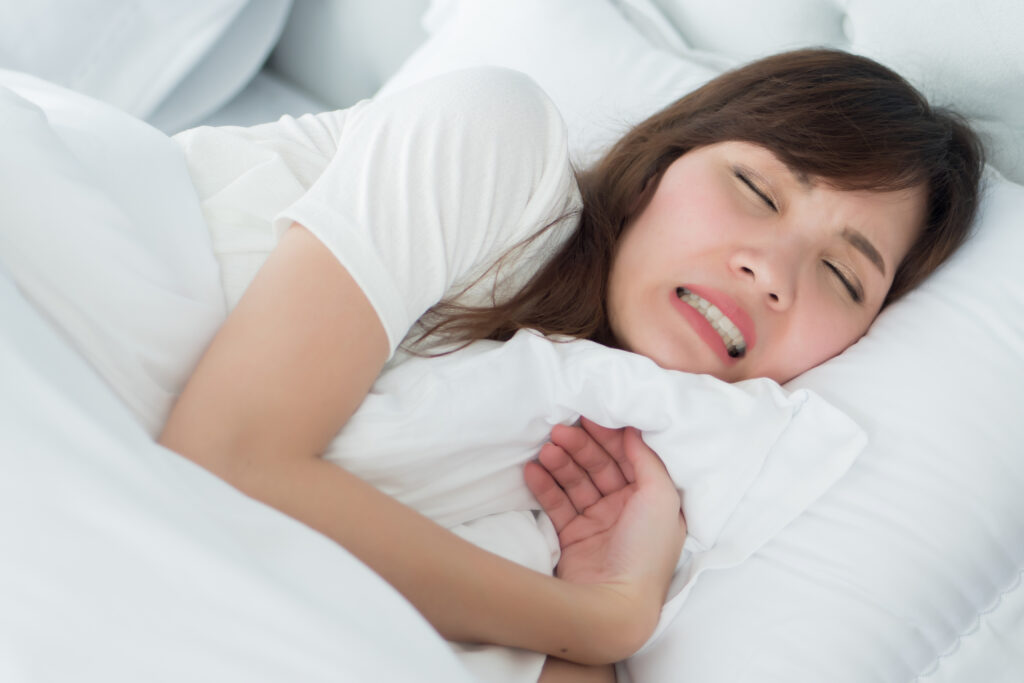
You might wake with a sore jaw or a headache. Your partner might have told you about loud grinding.
Most nighttime teeth grinding happens because stress, sleep issues, and bite problems push your jaw muscles into clenching during sleep. We’ll show what triggers grinding, how professionals diagnose it, and which simple steps can protect your teeth and sleep.
We explain clear, practical solutions—from night guards and bite care to stress reduction and sleep testing. You can start protecting your teeth and sleeping better tonight.
Key Takeaways
- Identify whether stress, sleep problems, or bite issues cause your grinding.
- Watch for jaw pain, headaches, or worn teeth as signs to seek help.
- Use night guards, bite treatments, and lifestyle changes to reduce damage.
What Is Bruxism and Nighttime Teeth Grinding?
Bruxism is when we clench, grind, or rub our teeth together. It can happen while we are awake or during sleep and can wear teeth, strain jaw muscles, and cause headaches.
Types of Bruxism: Sleep Versus Awake
Sleep bruxism happens during sleep and often shows up as loud grinding or worn tooth surfaces. A partner may notice the sound, or we may learn about it from dental wear, broken fillings, or morning jaw pain.
Sleep bruxism is linked to brief brain arousals, sleep disorders, and family history. It usually occurs in lighter sleep stages and can happen many times each night.
Awake bruxism happens while we are conscious and often looks like steady jaw clenching. It may occur during stress, concentration, or habits like chewing pens.
Awake bruxism tends to produce more muscle fatigue and jaw pain than loud grinding. People often can change their behavior once they notice it.
How Bruxism Relates to Jaw Clenching
Jaw clenching is a core action in both awake and sleep bruxism. When we clench, we hold the teeth together tightly; when we grind, we move the teeth back and forth.
Repeated clenching forces the temporomandibular joints (TMJs) and surrounding muscles to work beyond their normal limits. Effects include tooth wear, cracked restorations, and persistent jaw soreness.
Clenching raises muscle tension and can trigger tension-type headaches. Managing clenching—through behavior changes, stress control, or a dental nightguard—reduces damage even if the grinding itself continues.
Nocturnal Bruxism as a Sleep-Related Movement Disorder
Nocturnal bruxism (nighttime teeth grinding) is classified as a sleep-related movement disorder because it happens with sleep arousals. It is not just “bad teeth”; brain activity briefly shifts, and jaw muscles fire in bursts.
These episodes often last seconds but can repeat many times. Risk factors include stress, stimulants (caffeine, tobacco), certain medications, and sleep disorders like sleep apnea.
Dentists may see signs first, while sleep specialists may evaluate links to other sleep problems. Treating underlying sleep issues and reducing arousal triggers often lowers the frequency and severity of nighttime grinding.
Common Causes and Risk Factors
We see several clear reasons people grind their teeth at night. These include emotional triggers, breathing and sleep disorders, how the teeth fit together, and certain habits or medical issues.
Stress and Anxiety
Stress and anxiety rank high among causes of teeth grinding. When we are tense, our jaw muscles clench as a reflex.
This can become a habit that carries into sleep, where tight jaw muscles activate repeatedly. Emotional pressure from work, family, or school often shows up as daytime clenching first.
Over time, that pattern transfers to sleep bruxism and leads to morning jaw pain, headaches, and worn tooth surfaces. To reduce this driver, we recommend stress-reduction steps like regular relaxation exercises, limiting stimulants late in the day, and seeking therapy when anxiety is persistent.
Small behavior changes can lower muscle tension and break the clenching habit.
Sleep Apnea and Related Disorders
Sleep-disordered breathing links closely to nocturnal teeth grinding. In obstructive sleep apnea (OSA), airway blockages cause brief breathing pauses and arousals.
Those micro-arousals can trigger jaw muscle bursts and grinding episodes. We often see patients who snore, gasp, or wake tired and who also have tooth wear.
Treating OSA with CPAP, oral appliances, or positional therapy can reduce grinding by stabilizing sleep and stopping the repeated arousals that provoke jaw activity. If breathing problems or loud snoring accompany grinding, we advise a sleep study.
Fixing the underlying sleep disorder often improves both sleep quality and bruxism.
Malocclusion and Bite Issues
How teeth meet affects grinding risk. Malocclusion—crowded teeth, misaligned bites, or a missing tooth—can create uneven contact that encourages grinding as the jaw seeks a comfortable position.
Small bite issues can lead to repeated tooth contact at night. We check for flattened enamel, chips, and specific wear patterns that point to bite-related bruxism.
Dental corrections such as reshaping, crowns, or orthodontics can change contact points and ease the reflex to grind. A custom night guard protects teeth while we evaluate and, when needed, treat bite problems.
Guards do not fix malocclusion, but they prevent damage and reduce muscle strain while longer-term dental care proceeds.
Lifestyle and Medical Factors
Certain lifestyle choices and medical conditions raise bruxism risk. Caffeine, alcohol, and tobacco use, especially late in the day, increase nighttime jaw activity.
Recreational drugs and some prescription medicines, including some antidepressants, can also trigger grinding. Medical issues like GERD, Parkinson’s disease, ADHD, and certain sleep disorders may coexist with bruxism.
Family history plays a role, too—sleep bruxism often runs in families. We advise cutting late caffeine and alcohol, stopping tobacco, and reviewing medications with a provider.
Simple lifestyle changes and treating coexisting medical conditions often lower grinding frequency and reduce tooth damage.
Symptoms and Warning Signs
We watch for specific signs that show grinding is happening at night and how it affects teeth, jaw, and sleep. These signs range from pain when we wake up to visible wear on our teeth and reports from a bed partner.
Jaw Pain and Morning Headaches
Jaw pain often shows up first. We may wake with a tight or sore jaw, stiffness when opening the mouth, or pain at the temples and jaw joint (TMJ).
This pain can make chewing uncomfortable and limit how wide we can open our mouths. Morning headaches are common and usually feel like a tension headache across the forehead or at the base of the skull.
These headaches often start right after waking and ease during the day. If headaches and jaw pain happen most mornings, they point strongly to nighttime clenching or grinding.
Tooth Sensitivity and Dental Damage
Grinding puts heavy force on teeth. We may notice increased sensitivity to hot, cold, or sweet foods.
Sensitivity can signal worn tooth enamel or exposed dentin from enamel erosion. Look for flattened or chipped tooth edges, filling damage, or crowns that feel loose.
Teeth that look shorter or show shiny wear facets mean repeated grinding. If fillings crack or teeth loosen, we should see our dentist quickly to prevent further damage.
Facial Pain and Muscle Soreness
Our facial muscles can feel sore after a night of grinding. The muscles used for chewing — the masseters and temporalis — may ache or throb, especially when we touch them or chew.
Soreness can spread to the neck and shoulders, causing stiffness. We might notice increased tension during the day, because overnight clenching carries over.
Persistent facial pain that doesn’t improve with rest suggests ongoing bruxism that needs attention.
Sleep Disruption and Partner Observations
Grinding can disturb sleep quality for our partner and ourselves. We might wake feeling unrested or notice daytime sleepiness, even if total sleep time seems normal.
Partners often report loud grinding noises or jaw clenching. They may hear short grinding episodes rather than continuous sound.
If a partner notices frequent noises or we wake them, that is a clear warning sign to get evaluated for sleep bruxism.
Diagnosis and When to Seek Help
We check for signs you can see and symptoms you may not notice. We use dental exams, oral health checks, and sometimes sleep studies to find the cause and guide treatment.
Dental Examinations and Tooth Wear Detection
We inspect your teeth for patterns of wear that point to nighttime grinding. We look for flattened surfaces, chipped or loose teeth, and worn enamel that exposes dentin.
These signs tell us grinding has been happening often or for a long time. We also ask about morning jaw pain, headaches, and partner reports of loud grinding.
Digital photos or dental impressions help us track damage over time. If restorations like fillings or crowns show unusual wear, we document that too.
If tooth wear is advancing or you have pain, we recommend starting protective measures, such as a custom night guard, while we investigate further.
Oral Health Assessment
We examine gums, jaw muscles, and the temporomandibular joints (TMJs) for tenderness, clicking, or limited movement. We check bite alignment and note any missing teeth or dental work that might change how your jaw moves.
We review your medical and dental history for factors linked to bruxism: stress, anxiety, medications, or gastroesophageal reflux. We also screen for signs of sleep apnea, which often coexists with sleep bruxism.
We may take X-rays to rule out other causes of pain or tooth damage. Based on findings, we collaborate with your dentist to plan repairs and preventive care.
Polysomnography and Sleep Studies
When symptoms suggest sleep-related causes, we refer you for a sleep study or polysomnography. This overnight test records brain waves, breathing, oxygen levels, and jaw muscle activity.
It shows whether grinding events occur with arousals, snoring, or apnea. Polysomnography helps us see if sleep apnea or other sleep disorders drive your bruxism.
The test guides treatment—treating sleep apnea can reduce grinding episodes in many patients. We advise bringing a list of medications and a partner’s description of night events to the study.
Results let us coordinate care between Gwinnett Sleep and your dental provider.
Consulting Sleep Specialists
We work with sleep specialists when grinding may stem from a sleep disorder or when standard dental measures don’t help. Sleep specialists evaluate polysomnography results and recommend targeted treatments, like CPAP for sleep apnea or behavioral therapy for arousal-related grinding.
We discuss medication effects and may adjust prescriptions with your prescribing doctor. Specialists also guide cognitive-behavioral strategies, stress management, and referrals to mental health or ENT providers if needed.
Effective Solutions and Treatments
We focus on devices and dental care that protect teeth, reduce muscle strain, and fix bite problems. Each option targets different causes, so choosing the right one depends on your symptoms, test results, and dentist’s advice.
Custom Night Guards and Dental Splints
We recommend a custom night guard when grinding damages enamel or causes jaw pain. A custom night guard is molded to your teeth for a precise fit.
It separates upper and lower teeth to stop direct contact and reduce wear. Dental splints work like night guards but may also reposition the jaw slightly.
We tailor materials—soft for comfort, hard for heavy grinders—to balance protection and durability. Expect 1–2 follow-up visits to adjust the fit, and replace the device if it shows cracks or heavy wear.
Use care tips: clean the appliance daily with a soft brush and cool water. Avoid hot water that warps the plastic, and store it in its case.
Bring the guard to dental checkups so we can check fit and tooth changes.
Mandibular Advancement Devices
We suggest a mandibular advancement device (MAD) for patients who grind due to mild to moderate sleep apnea or airway collapse.
MADs hold the lower jaw forward slightly to open the airway and reduce arousals that trigger grinding.
These devices are custom-made by dentists experienced with sleep appliances.
We adjust the degree of advancement gradually over several visits to improve comfort and prevent jaw pain.
Side effects can include increased salivation, teeth shifting, or temporary jaw soreness; we monitor these and modify the device as needed.
MADs are different from night guards: night guards mainly protect teeth, while MADs treat airway collapse and can reduce grinding episodes tied to sleep-disordered breathing.
Orthodontic and Dental Correction
We consider orthodontic treatment or dental correction when bite misalignment causes chronic bruxism.
Straightening teeth with braces or clear aligners can remove uneven contacts that trigger clenching.
Restorative work—crowns, onlays, or reshaping—fixes high spots or broken teeth that contribute to grinding.
We plan treatments to preserve tooth structure and avoid increasing bite forces elsewhere.
In severe cases, a full-mouth rehabilitation may be staged to protect function and appearance.
Coordination between orthodontists and restorative dentists gives the best outcome.
We review X-rays, bite scans, and wear patterns before recommending tooth movement or permanent restorations.
Lifestyle Changes and Preventive Strategies
We focus on steps you can take at home and with your clinician to lower grinding, protect teeth, and reduce jaw pain.
Practical habits, targeted exercises, and medical options work best when combined.
Stress Management and Relaxation Techniques
We reduce grinding by lowering stress and tense muscles before bed.
Try a 10- to 20-minute routine of deep breathing (4 seconds in, 6 out) or guided meditation to calm the nervous system.
These techniques cut sympathetic arousal that often triggers nocturnal clenching.
We also recommend progressive muscle relaxation: tighten and release facial and jaw muscles for 5–10 minutes.
Yoga or gentle stretching in the evening helps release whole-body tension that transfers to the jaw.
If stress is chronic, cognitive-behavioral therapy or short-term counseling can address underlying anxiety.
Biofeedback devices and apps can help us notice patterns and measure progress.
Limit caffeine and alcohol in the afternoon and evening, since both increase the chance of sleep-related grinding.
Jaw Exercises and Mouth Therapy
We use simple mouth and jaw exercises to lower muscle tightness and improve jaw control.
Start with slow, controlled jaw opening and closing for 10–15 repetitions, then perform side-to-side movements.
Do these twice daily to reduce morning soreness.
Isometric exercises also help: place your thumb under the chin and push gently upward while resisting with the jaw for 5–10 seconds.
Repeat 6–8 times.
Gentle massaging of the masseter and temporalis muscles for 2–3 minutes per side can ease trigger points.
A trained dental or physical therapist can teach bruxism-specific routines and use manual therapy.
Custom night guards protect teeth but don’t stop the habit; pair guards with these exercises for better results.
Improving Sleep Hygiene
We improve sleep patterns to reduce episodes tied to light sleep and arousals.
Keep a consistent sleep and wake time every day, including weekends.
Aim for 7–9 hours and a pre-sleep routine that begins 30–60 minutes before bed.
Limit screen time and bright light an hour before sleep to support melatonin production.
Avoid heavy meals, nicotine, caffeine, and alcohol within 3–4 hours of bedtime.
Make the bedroom cool, quiet, and dark; white noise or earplugs can reduce micro-arousals that trigger grinding.
If snoring or breathing pauses occur, seek a sleep study.
Treating sleep apnea often lowers bruxism because it stops the sleep disruptions that prompt jaw clenching.
Medical and Pharmacological Approaches
We consider medications and targeted therapies when conservative steps don’t work.
Short-term use of muscle relaxants at bedtime may reduce severe muscle activity; prescribe under medical supervision because of side effects and dependency risks.
Botulinum toxin (Botox) injections into the masseter can reduce grinding force and pain for several months.
We arrange this only after dental evaluation and usually with follow-up dosing plans.
If bruxism links to antidepressants or stimulants, discuss medication changes with the prescriber.
In some cases, switching drugs or adjusting timing reduces grinding.
For complex cases, referral to a sleep specialist or neurologist helps evaluate underlying disorders and coordinate multidisciplinary care.
Long-Term Effects and Complications
Nighttime teeth grinding can wear down tooth enamel, strain the jaw joint, and damage the gums.
These problems can lead to pain, more dental work, and changes in how our bite fits together.
Dental Consequences: Enamel Erosion and Tooth Loss
When we grind, the hard enamel on our teeth wears away over time.
Worn tooth enamel makes teeth more sensitive to hot and cold and raises the risk of cavities.
We may notice flattened or shortened teeth and small chips or cracks that keep getting worse.
If grinding continues, the enamel can wear so thin that the inner tooth structure becomes exposed.
That exposure can lead to infections or tooth fractures that require fillings, crowns, or root canals.
In severe cases, a tooth may be lost and need an implant or bridge to restore function.
Jaw Joint Disorders and TMJ
Chronic grinding places heavy, repeated pressure on the temporomandibular joint (TMJ).
We may feel jaw pain, tightness, or a catching or popping sound when we open or close our mouths.
The joint itself can become inflamed or misaligned.
TMJ problems can limit how wide we can open our mouths and make chewing painful.
Ongoing strain also spreads tension to the face, neck, and shoulders, producing frequent headaches.
Treating the cause early can prevent progressive joint damage and reduce the need for more invasive TMJ procedures.
Gum Recession and Periodontal Risks
Grinding increases the force on teeth and the supporting gums. Over time, this pressure can push the gums away from the tooth roots, causing gum recession.
Receding gums expose tooth roots, which are more prone to decay and sensitivity. Gum recession also deepens pockets around teeth, which can trap bacteria and raise the risk of periodontal disease.
If periodontal disease progresses, we can lose bone support and eventually teeth.
Protecting Your Teeth and Improving Sleep Quality
Nighttime teeth grinding can be more than an annoying habit—it may be a sign that stress, sleep disruption, or airway issues are placing strain on your jaw while you sleep. Bruxism often shows up as morning jaw soreness, headaches, tooth sensitivity, or visible wear and cracking over time. While custom night guards can protect your teeth, lasting improvement often depends on identifying what’s triggering the grinding in the first place. For many people, that includes managing stress and correcting bite issues, but it can also involve evaluating sleep-disordered breathing such as obstructive sleep apnea, which can trigger grinding during brief nighttime arousals.
The good news is that effective solutions are available. A comprehensive evaluation can clarify whether bruxism is primarily dental, behavioral, or sleep-related—and guide the right combination of treatment. Depending on the cause, that may include a dental splint or night guard, stress-reduction strategies, improved sleep hygiene, jaw therapy, or sleep testing and treatment when breathing issues are involved. Addressing bruxism early helps prevent long-term complications such as TMJ dysfunction, gum recession, and significant tooth damage that can require extensive dental repair.
At Gwinnett Sleep, our board-certified sleep specialists help patients uncover whether teeth grinding is connected to underlying sleep disorders and provide personalized care plans to improve both sleep quality and long-term health. If you’re waking up with jaw pain, headaches, or persistent fatigue, our team can help you find the cause and the right solution.
Schedule your consultation today and start sleeping the difference.